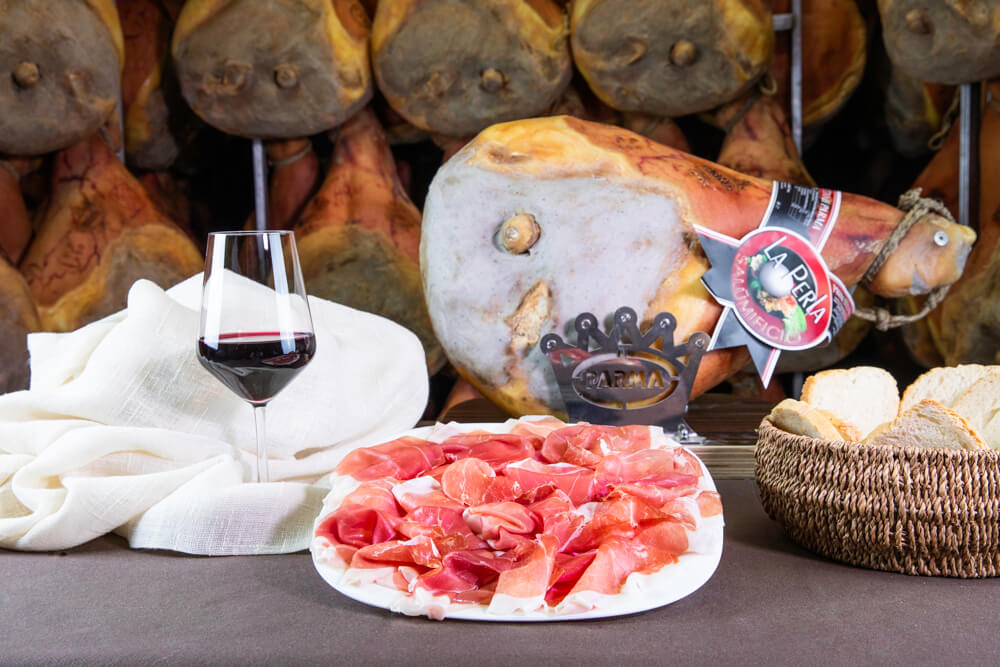
Prosciutto di Parma PDO is one of the best-known names in Italian gastronomy, yet it still holds details and stories that few people know. Here are five facts worth discovering.
1. The name comes from the Latin "perexsuctus"
The word "prosciutto" comes from the Latin perexsuctus, the past participle of perexsugere, meaning "thoroughly dried out". A name that perfectly describes the process: the slow, natural removal of moisture from the meat through salt and time.
2. A tradition more than two thousand years old
As early as the 2nd century BC, the Roman writer Cato the Elder described, in his treatise De Agri Cultura, the curing of hams in what is now Emilia. Prosciutto di Parma therefore has a continuous history that predates even the spread of pasta in Italy.
3. The pig isn't necessarily born in Parma
Many people don't know that the pigs destined to become Prosciutto di Parma can be born and raised in any of ten approved regions of central-northern Italy. What must happen in the designated area around Parma is only the curing stage: it's there, thanks to the unique microclimate, that a fresh leg becomes Prosciutto di Parma PDO.
4. It loses a quarter of its weight while curing
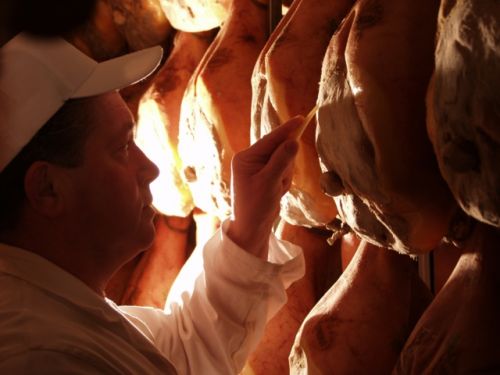
A fresh leg typically weighs 12-13 kg. During the months of curing, moisture evaporates slowly and naturally, so much so that the finished ham loses around 25% of its original weight, concentrating its aroma and flavour.
5. Every ham is traceable back to the farm
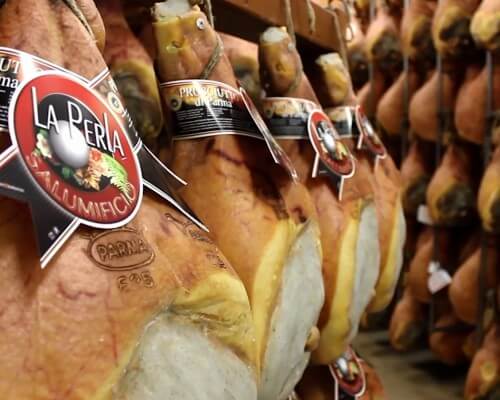
For some years now, every Prosciutto di Parma has carried a seal that allows full traceability: it's possible to trace it back to the farm of origin and the slaughter batch. Prosciutto di Parma was among the first Italian food products to adopt such thorough traceability, well before it became a common consumer request.
Five details that show just how much work, history and precision lie behind every slice. Come discover the rest in our tasting room in Langhirano.